
 By Janet Franklin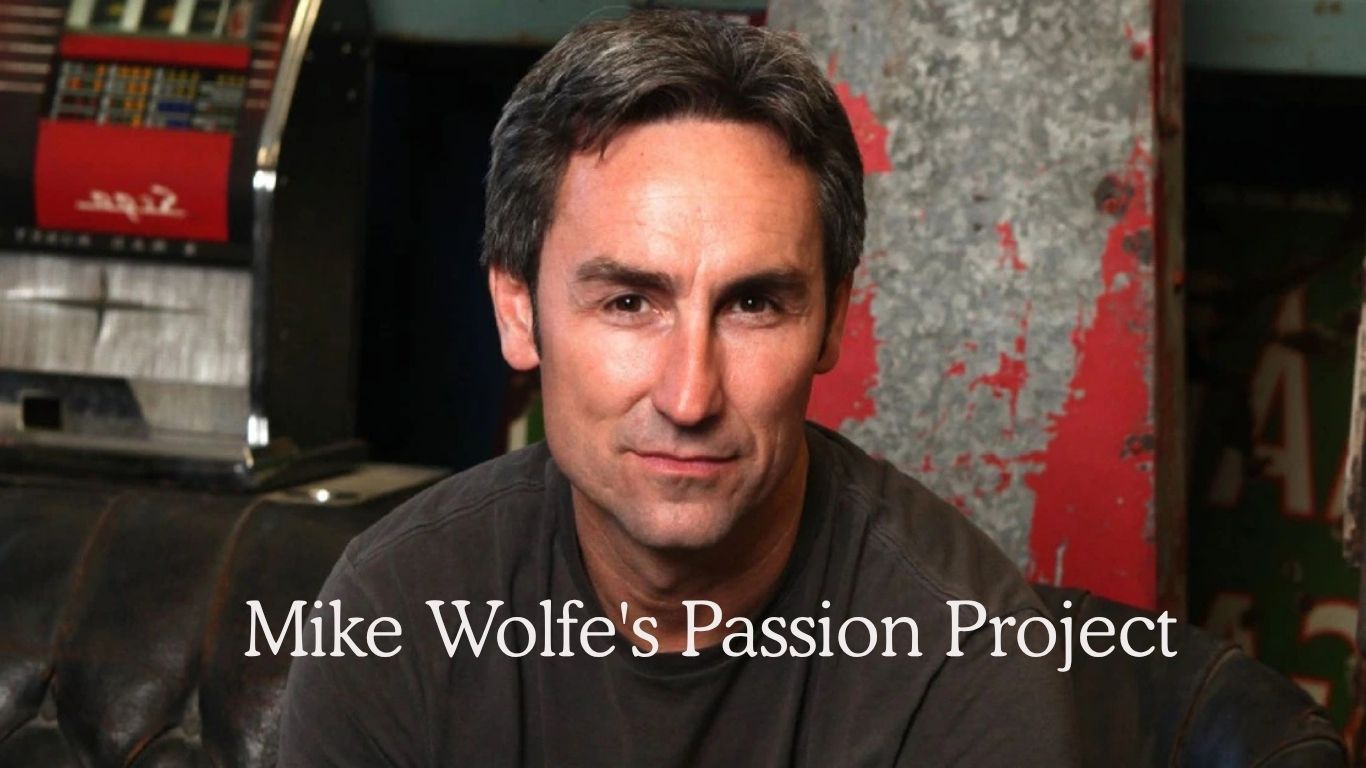
This is the friendly “picker,” the person who can find valuable items that have been hidden in a cluttered barn for decades. For Mike Wolfe, the art of the find has been the key to his work and TV legacy. Then what happens when his “pick” is an entire empty building instead of a rare neon sign or an old motorcycle?
At least you get something more important than just another TV. It’s a job that you really care about.
Wolfe has recently turned his attention from the nomadic life of picking to a stable spot on the map: an old, run-down gas station in downtown Columbia, Tennessee. It’s not just a real estate flip; this is a sincere try that shows what he believes in his heart. This project is not about preserving the society; it is about rebuilding it. Also, this is a part of Mike Wolfe that isn’t talked about enough.
The Find: How to Find a Gem in the Dark
Let’s start the party. Picture a typical gas shop from the early 1900s. The building has broken concrete, weathered brick, and that strangely calm feeling that only empty places have. It has good bones but a tired spirit. It was held up for many years in Columbia, a town with a lot of history. Most cars would be able to see a tear-down contender as they went by. But Mike Wolfe? He became interested in a story.
As a picker, you can tell a story in every rusty bolt and flaking paint. This gas station wasn’t just a building; it was a piece of Americana from a time when people drove long distances, had full-service restaurants, and drank soda out of glass bottles. Wolfe’s genius has always been his ability to see possible worth where others only see ruin. He is putting the same idea into action on a very large scale with this project.
He didn’t just see a falling-apart church. A future meeting spot came to his mind. He imagined benches outside for laughing, a fire pit for telling stories, and the warm glow of lights bringing life back to an old area. The potential that was stuck in the building was the finding, not the building itself.
Beyond the Show: What Makes a Picker Do a Passion Project?
The show American Pickers gives us a look into the world of gathering, but it’s mostly about business. For Mike and his team, the circle of buying low, selling high, and buying low keeps going. So why would someone like Wolfe put his own time, money, and effort into a project that doesn’t move?
A deep respect for craftsmanship and custom has always been a part of his art. This is where the answer lies.
From what I’ve heard from fans and preservationists, this is a common theme. The first exciting part of the hunt is finding a rare item. But soon, things will not be as exciting. Now the subject is care. It is very important to keep the past alive so that the artifacts and stories of the past don’t get lost in the wreckage of progress.
Wolfe thinks that this gas stop is a great example of that. This monument shouldn’t be turned into something to be sold; it should be kept safe. This love project is his way of giving back. He planted a flag and said, “This place mattered then, and it can matter again now.” It’s a physical sign of his belief that our history is worth more than just money. It’s also cultural and social value.
The Picture: From Dozing Off to Arriving at the Apex
At any rate, the vision came to him. In real life, how do you do it? It takes more than a dream and a hammer to fix up an old building. Wolfe worked on this with a professional building and design company. This step was very important. It adds modern life and purpose to a building while keeping its original charm. This is what makes a real restoration different from a do-it-yourself project.
This area, which has been fixed up and is now called “Revival,” is a great example of adaptable reuse. Let’s look at what that means:
The Shell: The gas station’s old facade and structural stability were kept. It can’t be changed. You have kept the structure’s soul.
The Function: The goal is rethought in a big way. It used to pump gas, but now it makes drinks and serves food. It’s a great metaphor to trade one kind of power for another, isn’t it?
The Atmosphere: Putting a fire pit in the middle and seats outside is a great plan. It changes an area where you do business into an immersive one, like a restaurant or gas stop. Now it’s a place to stay, not just a stop. A place to connect.
This is not just a repair; it is a translation as well. It keeps the original accent but changes the words to make them more modern for today’s listeners.
The main goal
– Revival is all about preserving things, building communities, and sharing stories.
– A normal makeover puts making money, being efficient, and updating things at the top of the list.
Design Approach
-Revival uses adaptive reuse while keeping the spirit of the original.
– Tear-downs or full strip-outs are common parts of standard remodeling.
Things used
-Revival makeovers use old, reclaimed, and real materials a lot. Standard renovations, on the other hand, usually use new, cheap, and standard materials.
In the end,
– Revival creates a one-of-a-kind place with a story to tell.
– Standard makeovers make rooms that work but aren’t unique.
Effects on Community
-Revival projects have a big effect because they turn buildings into landmarks and meeting places.
Standard -renovations, on the other hand, have less of an effect and usually just add another business.
Why this project is important (but not for the reason you think)
Yes, Columbia now has a new diner and bar. Great for going out at night. But Mike Wolfe’s passion project has a much deeper value. It boosts the health of both society and the economy.
Think about it. This kind of project does a number of important things:
- Setting an Example: When a famous person invests a lot of money in preserving history, it makes other investors and business owners more likely to do the same. It proves that putting money into the town is a good idea.
- It turns into a pulse: Cores are needed in towns. Instead of homes or jobs, they need third places, which are places where people can get together. With its fire pit and chairs, “Revival” is meant to be just that.
- It Shows Respect for Identity: In a world where all strip malls look the same, a town can keep its uniqueness by preserving old buildings. That sense of place is kept alive in a way that can’t be bought.
There are some experts who may disagree with me and only look at the bottom line when figuring out the return on investment (ROI) of a job like this. The things that are used to measure it are community pride, the appeal to tourists, and the protection of a unique local history. It’s very useful.
The Ripple Effect: How One Project Can Bring Life Back to a Town
The most exciting thing about a love project like Mike Wolfe’s is the way it affects other people. One building that has been beautifully restored has a funny way of making everything around it better.
It is not just an idea; it is a real thing. Some anchor projects might bring more people on foot, which is good for stores close. It might make other property owners want to put money into their own homes and clean up the outsides. It creates a circle of pride and investment that is good for everyone. Before you know it, a small spark—a well-kept gas station—has helped bring a whole city area back to life.
That’s what this place is really known for. There is no need to keep a single form. The goal is for that building to be a lighthouse that shows the way for everyone in the neighborhood.
Questions People Ask Often
1. In what place is Mike Wolfe’s dream project, a gas station?
It is right in the middle of Columbia, Tennessee. Columbia is a historic city in Maury County that is known as the “Antique Capital of Tennessee” because it has so many buildings from the antebellum era.
2. What will you call the gas station?
The area that has been fixed up will be called “Revival.” The name is a great representation of both the building’s rebirth and the desire to bring people together again.
3. What will “Revival” be? A gallery? A place of business?
You can eat there and drink there. The plans say that it will be a community-focused restaurant and bar with lots of outdoor area that serves food and drinks.
4. Will this be shown on American Pickers?
There is still a chance that the restoration will be part of the show, but it has not been officially announced yet. This looks like Wolfe’s own work, not part of the show’s format.
5. What does Mike Wolfe do? Isn’t he just collecting old things?
This work shows that his love is much deeper than just gathering. He cares a lot about restoring historic buildings and making communities stronger. Restoring a building is the best part of “picking” because he gets to share a piece of history with everyone.
6. What time will “Revival” be out?
The schedule for any building job can change, but it can be easier to work with when restoring historic buildings. The official start times have not been made public yet. Following Mike Wolfe on social media or local news sites in Columbia, TN is the best way to stay up to date.
7. Is this like the work of Mike Wolfe?
Yes, of course. As part of Wolfe’s work with preservation efforts in Nashville, Tennessee, where he grew up, several buildings on his own land have been fixed up. Still, this is one of his biggest and most well-known community projects to date.
Conclusion
Mike Wolfe’s love project is more than just a sweet story in Colombia. A master class in modern being a good caretaker. It shows that the point of preserving is not to live in the dark, but to use the past to make the future more interesting, active, and linked.
His lifelong practice of picking has given him the ability to find value, understand history, and tell a good story. These skills have been put to good use on a big scale. Not just a bar called “Revival” is what comes out of it. It shows what the goal is. It shows that the most valuable finds aren’t always the ones that fit in your car. Sometimes, it’s the ones that spark a community.