
 By Janet Franklin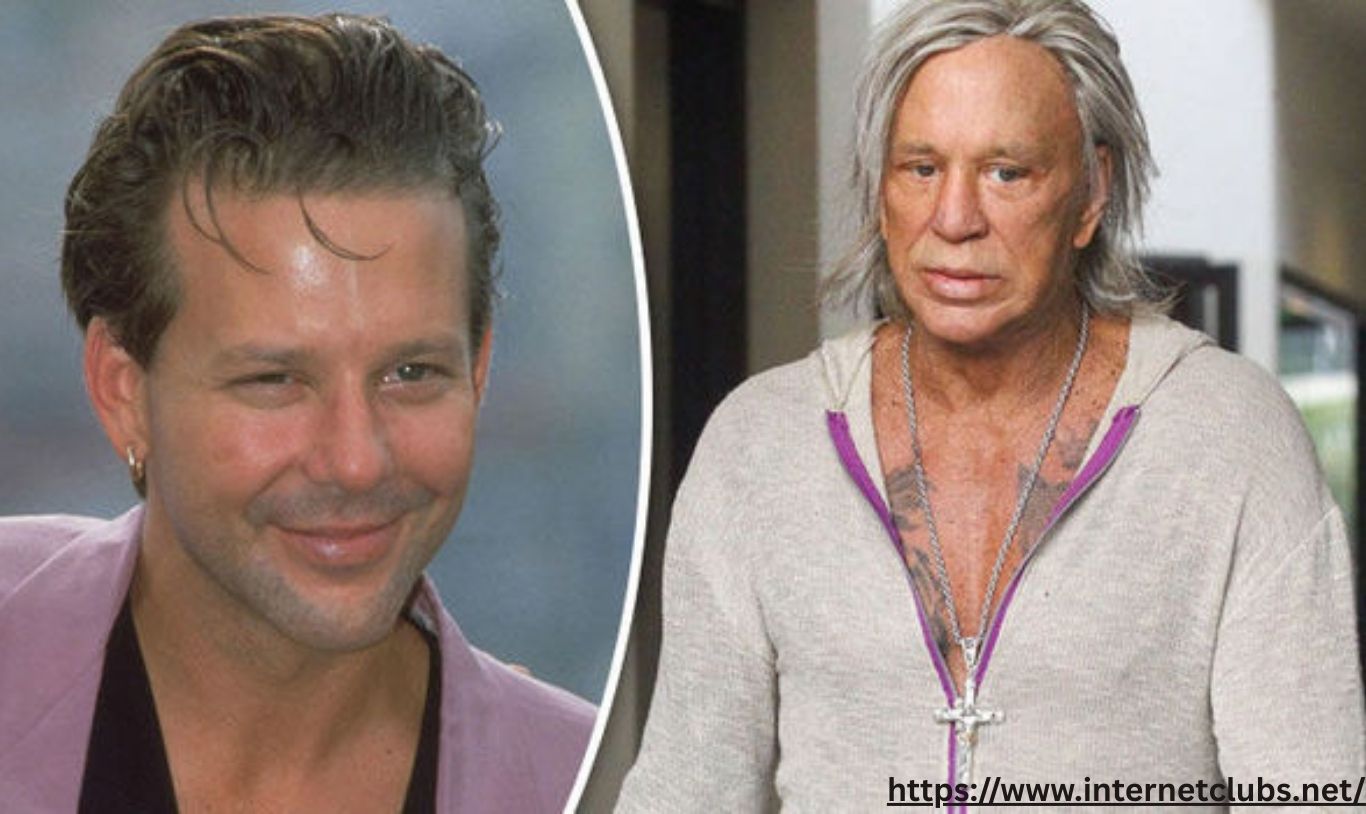
Mickey Rourke, one of the most mysterious actors in Hollywood, became famous in the 1980s for his very dramatic performances and gruff charm. As a young guy, Rourke won over viewers with his natural skill and strong screen presence. He was a Hollywood mainstay throughout the decade. But it wasn’t just his acting that had people talking; Rourke’s changing body over the years has been the subject of a lot of curiosity and examination. This article goes into further detail on Mickey Rourke’s rise from a promising young actor to the complicated and famous person he is now.
Early Years and Beginning in Acting
Mickey Rourke was born Philip Andre Rourke Jr. on September 16, 1952, in Schenectady, New York. His early life was not at all glamorous. Rourke’s parents split when he was young. He grew up in a working-class environment. His relationship with his father wasn’t good, so he turned to sports and eventually acting to find comfort. He loved boxing as a teenager, and it would eventually have a big impact on his life and career. But Rourke finally switched from sports to acting, which would take him to the heart of Hollywood.
Rourke got his big break when he got little parts on TV shows. He didn’t stand out in his early roles, but people soon noticed his outstanding looks and talent. In 1981, he got his big break when he was cast in the movie Body Heat, which starred Kathleen Turner. Even though his part was modest, it got Rourke into the movie business and set him up for future success.
Become Famous in the 1980s
Rourke’s big break came in the 1980s, a decade that would make him one of Hollywood’s most interesting young stars. His work in movies like 9½ Weeks (1986), Angel Heart (1987), and Barfly (1987) helped him become famous because they showed how well he could play complicated, moody characters. Rourke became famous all over the world because of these parts, and his powerful performances became the trademark of his early career.
Rourke and Kim Basinger were in a sexy and controversial romance movie called 9½ Weeks. The movie did well at the box office and made him a heartthrob of the 1980s. His portrayal of a dark and mysterious lover captures the essence of the decade’s quest for both physical appeal and emotional complexity. Angel Heart was another important role for Rourke, as he played Harry Angel, a private investigator caught up in a strange and scary scenario. This showed how flexible he is as an actor.
Rourke’s off-screen behavior and reputation for being hard to work with became a subject of conflict, even if he was doing well in business and getting more attention. Because he was rebellious and had a strong will when it came to acting, he often had problems with directors and producers. There was no doubt that Rourke was a star, but his growing renown came with its own set of problems.
The Move to Boxing and Its Effects
In the early 1990s, Mickey Rourke made a big choice that would change his life forever: he quit acting to become a boxer. Rourke had always loved boxing, and he thought it could help him focus and discipline himself better than acting could. His choice astonished a lot of people at the time because Rourke was about to become a big celebrity in Hollywood.
Rourke’s choice to box wasn’t just a passing thought; it was a serious commitment. He worked very hard to get ready, even fighting in professional boxing contests. He fought aggressively and was determined to win throughout his boxing career. Sadly, Rourke got hurt badly in the ring a few times. He hurt his face and nose in different ways while boxing, and these injuries would eventually need several surgery.
Many people think that Rourke’s many injuries from boxing had a big impact on his choice to go back to Hollywood. He had been boxing for a few years when he reached a turning point in both his career and his personal life. He thought about acting again after getting hurt and losing interest in the sport.
The Physical Change and the Arguments
Boxing injuries and the need for surgery
When Mickey Rourke started acting again in the late 1990s and 2000s, he looked very different, mostly because of injuries he got while boxing that still affect him now. Rourke has talked openly about the many operations he had to have to fix the harm that happened to him while he was in the ring. Rourke told The Daily Mail in 2009 how many operations he had to have done to fix his facial damage. He said that most of them were essential.
“I broke my nose twice. “I had five surgeries on my nose and another one to fix a broken cheekbone,” Rourke said. “I had to take cartilage out of my ear to fix my nose.” He said that the procedures were really difficult, especially the ones that were meant to fix his nose and the scars that came after. Rourke also said that the surgeons he chose caused some problems, which made his recuperation even harder.
Cosmetic Surgery and What People Think
In addition to the reconstructive surgeries, Mickey Rourke’s choice to have cosmetic surgery made the public even more curious about how he looked. He said that he had more facial procedures, including a cheek implant surgery that caused a lot of controversy. People said that the implants were done to assist him get a part in the movie Wild Orchid from 1990. Rourke’s ongoing relationship with cosmetic surgery got more public in 2017 when he posted a picture on Instagram of himself with his surgeon after having nose surgery. This sparked additional suspicions about how he looked.
As Rourke’s looks changed over time, the rumors about how many operations he had had reached new heights. Fans and critics argued about how much of his change was due to cosmetic surgery, with some experts saying that Rourke had had more surgeries than he had said he had. He has said that his boxing injuries have changed the way he looks, but it’s still not clear how much of his change was because he wanted to look good in Hollywood.
Career Comeback in the 2000s
Mickey Rourke’s acting career took off again in the 2000s, even though he had changed physically. His reappearance was marked by his well-received role in Darren Aronofsky’s The Wrestler (2008). Rourke played Randy “The Ram” Robinson in this movie. He was an older professional wrestler who was having trouble with physical discomfort and emotional suffering. The movie was a big hit, and it got Rourke a lot of attention and prizes, including a Golden Globe for Best Actor.
The Wrestler was said to be one of Rourke’s best performances ever. It was a genuine, emotional performance that showed how he could use his real-life problems to make a powerful character. Rourke’s character in The Wrestler was a lot like him in real life, and the movie showed the anguish and disappointment he felt in both his work and his personal life.
Rourke was able to get parts in other well-known movies after The Wrestler, such as Iron Man 2 (2010) and The Expendables (2010). This showed that he still had the talent and charm to make it in Hollywood, even though he had changed physically and had some problems in the past.
The Legacy of Mickey Rourke’s Early Life
Mickey Rourke’s career has been anything but normal when you look back on it. Rourke’s life is one of both success and failure. He was a rising star in Hollywood when he was young, but he later decided to become a boxer and changed his body in the process. Even if his looks have evolved a lot over the years, there is no denying his talent and legacy in the entertainment business.
Mickey Rourke’s life is a good example of how fame can be hard on a person’s health and mind. His story is a reminder that performers in Hollywood often have personal problems that affect their careers and lives in ways that the public may never completely comprehend.
As Mickey Rourke continues to work in the entertainment and celebrity industry, his early years will always be an important part of his history. They were marked by brilliance, determination, and a willingness to take chances in both his personal and professional life.
In conclusion
Mickey Rourke’s rise and fall in Hollywood as a young man is still a famous narrative of success and failure. Rourke’s career was always unpredictable, from his breakthrough as a heartthrob in the 1980s with roles in 9½ Weeks and Angel Heart to his controversial switch to boxing. His physical changes, which were mostly caused by boxing injuries and surgery, became just as much a part of his legacy as his acting skills. Rourke’s early years in Hollywood are still a tribute to his raw talent and rebellious spirit, even though he had to deal with a lot of problems and changes.
Mickey Rourke’s young self lives on in his trailblazing roles and the impact he left behind. His looks may have changed, but his impact on Hollywood and the movie business is still strong. His narrative shows how complicated fame can be, how it can affect you physically and emotionally, and how strong you have to be to get through tough times. Mickey Rourke’s journey from a young, daring actor to a seasoned professional proves that quality always shines through, no matter what happens in the world.