
 By John Martin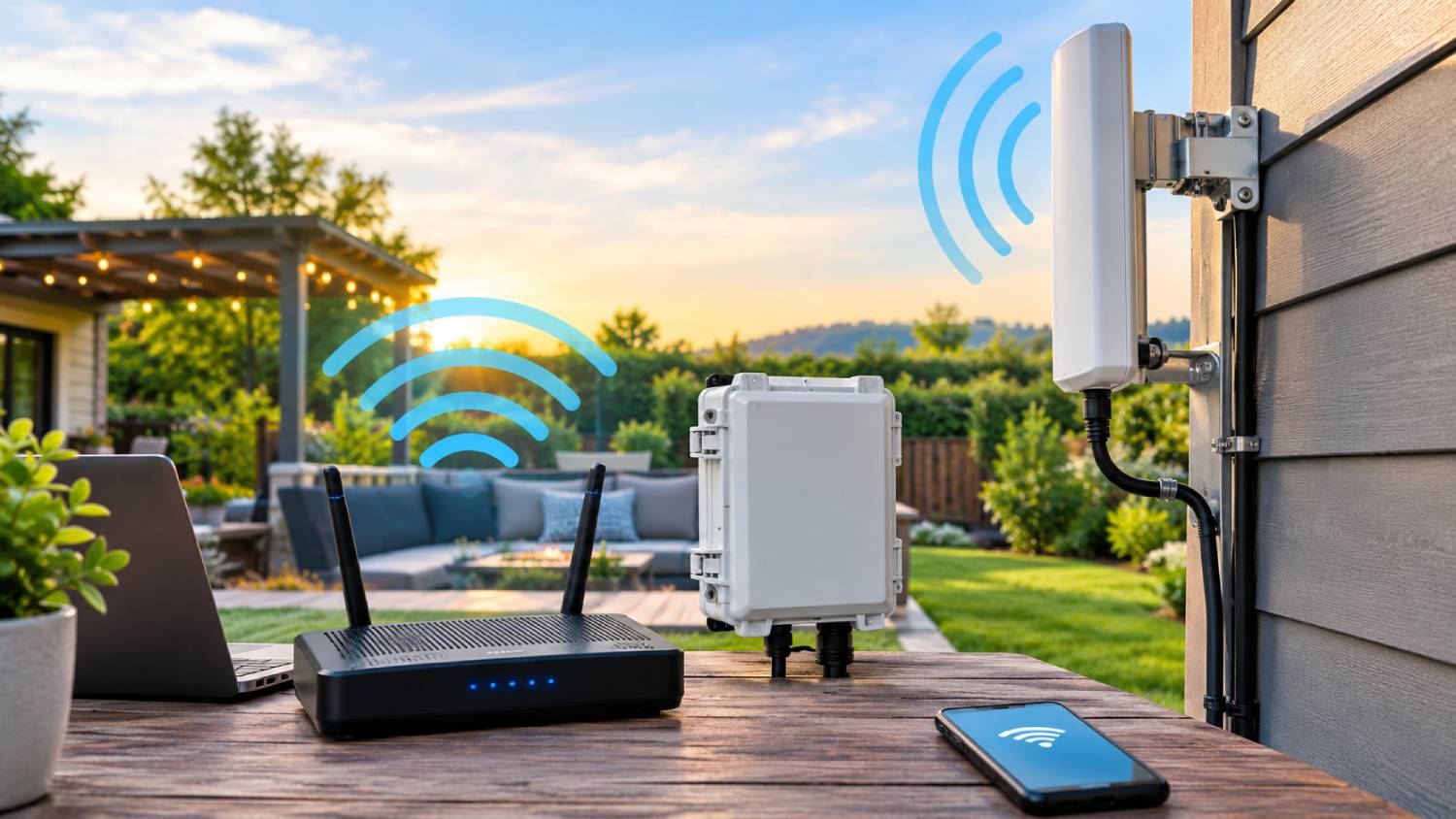
A reliable outdoor Wi-Fi connection can make a significant difference to businesses, farms, hospitality venues and properties with large gardens or outbuildings. However, extending a wireless network outdoors involves more than placing a standard router near a window. Equipment must withstand changing weather conditions, provide suitable coverage and maintain a stable connection.
Choosing the right outdoor routers, an appropriate Outdoor router enclosure and suitable antennas helps create a network that performs reliably in challenging environments. Understanding how these components work together makes it easier to plan an installation that meets your coverage and connectivity requirements.
1. Choosing the Right Outdoor Router
Outdoor routers provide network connectivity in locations where conventional indoor equipment may not deliver sufficient coverage or withstand the environment. They can support remote monitoring, CCTV systems, smart agriculture, industrial equipment and internet access across outdoor spaces.
When selecting a router, consider the following factors:
- Connectivity: Check whether you need Wi-Fi, 4G, 5G or a combination of technologies.
- Coverage: Consider the area you need to cover, surrounding buildings and potential obstacles.
- Compatibility: Ensure the router supports the required antenna connections, frequency bands and network standards.
- Power supply: Power over Ethernet (PoE) can simplify installations where a compatible device and suitable cabling are available.
- Environmental conditions: Consider temperature fluctuations, moisture, dust and exposure to direct sunlight.
An outdoor router should match the demands of the installation rather than simply offering the highest advertised speed.
2. Why an Outdoor Router Enclosure Matters
Even robust networking equipment can fail when exposed to rain, dust, condensation and temperature extremes. An Outdoor router enclosure helps protect sensitive electronics from these environmental hazards.
Materials and protection ratings
Two common enclosure materials are:
- Polycarbonate: Lightweight, impact-resistant and available in UV-stabilised versions suitable for outdoor exposure.
- Die-cast aluminium: A rigid option for demanding installations where mechanical protection and durability are important.
Check the enclosure’s Ingress Protection (IP) rating before purchasing. For example, IP67 indicates protection against dust ingress and temporary immersion under specified test conditions. It does not automatically guarantee suitability for every outdoor environment.
Condensation also deserves attention. Temperature changes can cause moisture to accumulate inside an enclosure, so a suitable pressure-equalising vent and appropriate installation can help manage internal humidity.
For installations requiring integrated antennas and environmental protection, GTT Wireless offers enclosure solutions designed for outdoor electronics, including options compatible with wireless networking equipment. Its product range includes IP67/NEMA 6-ready enclosures with antenna integration.
3. Understanding Outdoor Antennas
Antennas influence how wireless signals are transmitted and received. Choosing the right type depends on the required coverage, signal direction and network technology.
Omnidirectional antenna
An omnidirectional antenna transmits and receives signals across multiple horizontal directions. This makes it useful when devices are positioned around a central access point or when a mobile connection must communicate with a cellular network in different directions.
However, omnidirectional does not mean equal coverage in every direction or at every angle. Antenna gain, mounting height, obstructions and frequency all affect performance.
Directional antenna
A directional antenna focuses more of its energy towards a particular direction. It can be suitable for connecting two buildings or reaching a distant access point, provided the alignment and signal path are appropriate.
External or integrated antennas?
External antennas offer flexibility when positioning or replacing an antenna is necessary. Integrated antenna systems can simplify installation by combining antennas and protective housing in one assembly.
Before choosing, verify antenna frequency compatibility, connector type, gain and the router’s MIMO requirements. Poorly matched components or excessively long cables can reduce the benefits of an antenna upgrade.
4. Planning a Reliable Outdoor Wi-Fi Installation
A few practical checks can help prevent common installation problems.
- Survey the site: Identify obstructions, coverage gaps and potential sources of interference.
- Choose the mounting position: A higher, unobstructed position can improve coverage, provided the equipment remains accessible for maintenance.
- Protect cable entries: Use suitable glands, connectors and weatherproof installation methods.
- Check power and grounding: Follow the manufacturer’s electrical, surge-protection and earthing instructions.
- Test the finished installation: Measure signal strength, throughput and connection stability at the locations that matter.
Remember that Wi-Fi coverage and mobile network reception are different considerations. A router may provide strong local Wi-Fi while struggling to obtain a reliable 4G or 5G signal from the nearest mast.
Frequently Asked Questions
1. Can a standard router be used outdoors?
A standard indoor router should not be exposed directly to outdoor weather. It may be installed in a suitable protective enclosure if ventilation, temperature limits, power and antenna requirements are addressed.
2. Is an omnidirectional antenna suitable for every installation?
No. It is useful for coverage across multiple directions, but a directional antenna may be more appropriate for a fixed point-to-point connection.
3. What does IP67 mean for an outdoor enclosure?
IP67 indicates dust-tight protection and protection against temporary immersion in water under specified test conditions. Correct installation remains essential.
4. Does an outdoor enclosure improve Wi-Fi range?
An enclosure primarily protects equipment. Range depends on the router, antenna characteristics, placement, interference and surrounding environment. An integrated antenna system may improve the overall design, but results depend on the specific installation.
Conclusion
A dependable outdoor wireless network requires the right combination of router, enclosure, antenna and installation practices. By assessing connectivity needs, environmental exposure and coverage requirements before purchasing equipment, businesses can build systems that are easier to maintain and better suited to outdoor conditions.